

Dudleya (Summer Type) ✨
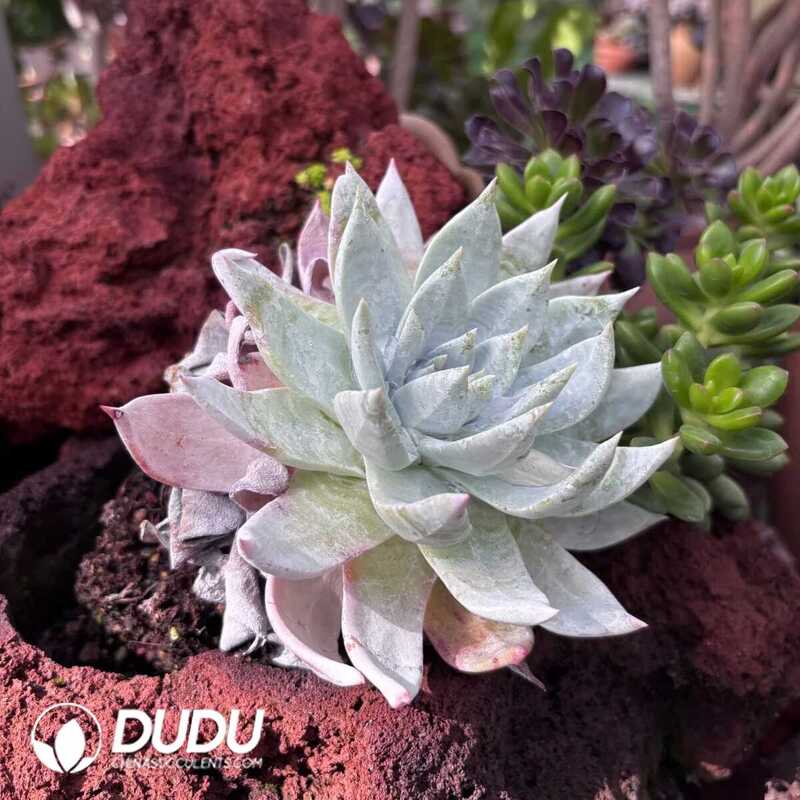
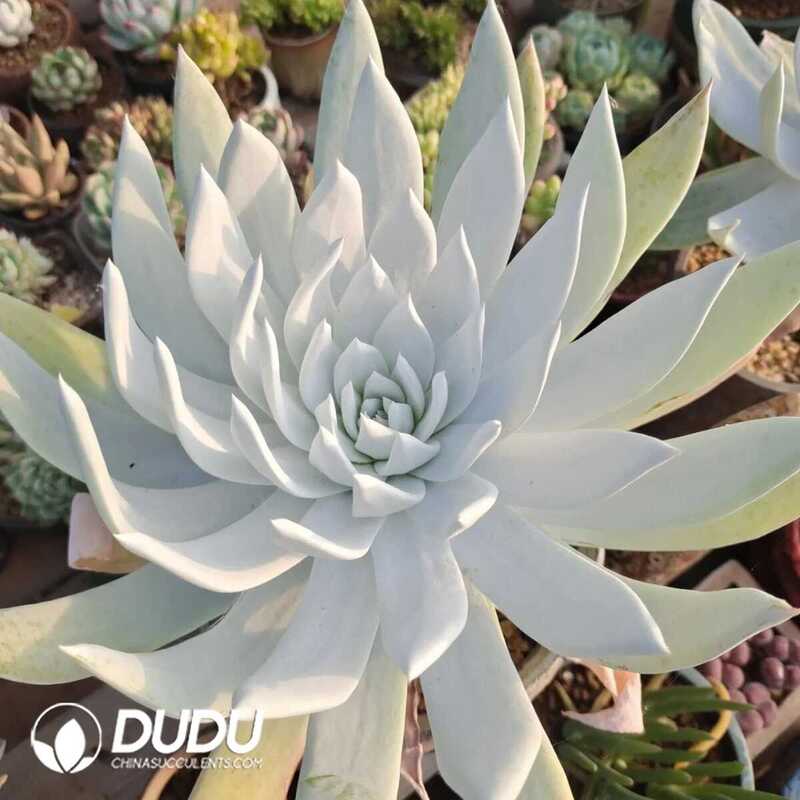
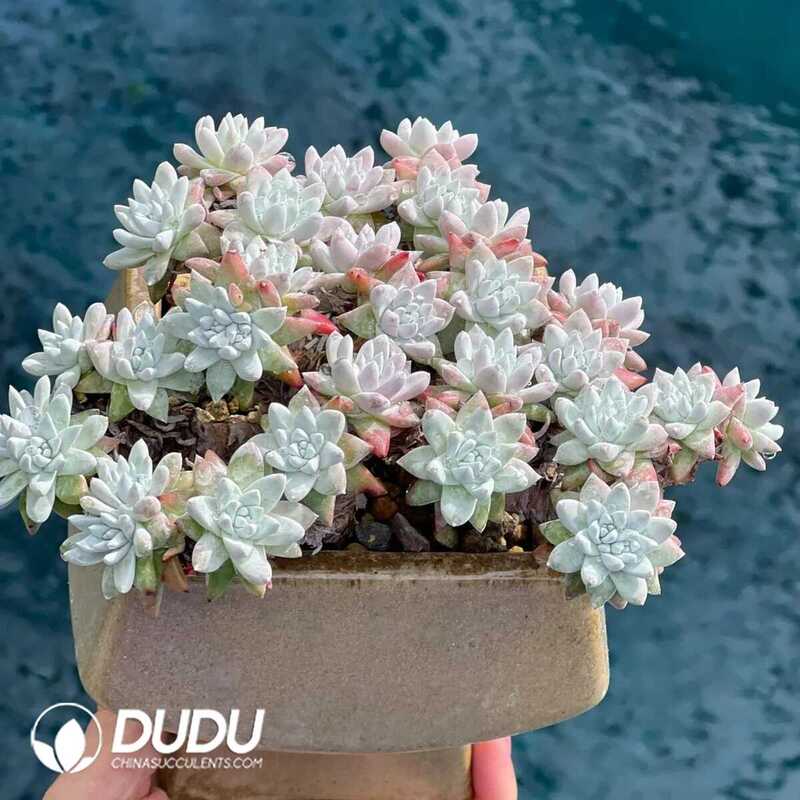
Dudleya are striking succulents native to coastal cliffs and rocky slopes, renowned for their elegant rosettes and often dramatic, powdery-white (farinose) coating. As summer-dormant growers, they thrive on intense light, exceptional drainage, and careful, infrequent watering to preserve their distinctive form and delicate farina.
📊 Botanical Profile
-
Key Trait: Forms tight, often monocarpic rosettes. Many species are covered in a beautiful, protective white farina—avoid touching to preserve it.
-
Habitat: Adapted to extremely well-draining, mineral-based soils on rocky outcrops, often in coastal environments.
-
Note: A slow-growing genus. Handle with care to avoid damaging the farina or roots, which are sensitive to disturbance.
☀️ Light & Temperature
-
Ideal Light (Indoor): PPFD 150–400 (≈ 12–35k lux).
-
Ideal Light (Acclimated Outdoor): PPFD 400–800 (≈ 30–70k lux).
-
Etiolation Risk: PPFD < 120 for over 2 weeks.
-
Sunburn Risk: PPFD > 700 for unacclimated plants, especially in still air.
-
Optimal Range: 15–28°C for best growth.
-
Tolerance: Can briefly tolerate lows near 0–5°C if perfectly dry. Maximum heat tolerance is 35–38°C only with strong, cooling airflow.
-
Summer Dormancy: Growth slows significantly above 30°C. Provide bright light, shade from hottest sun, and maximum airflow.
💧 Watering & Substrate
-
Golden Rule: Infrequent & Deep. Water thoroughly only when the substrate is 100% bone-dry. Verify with a weight check or dry skewer. Extremely sensitive to overwatering.
-
Soil Mix: Requires ultra-fast drainage. Use 80–90% inorganic grit (pumice, perlite, scoria) with 2–6 mm particle size. pH 6.0–7.2.
-
Potting: Unglazed terracotta pots are ideal. Ensure very large drainage holes. Use a deepish pot for taproot species. A top-dressing of gravel keeps the stem dry.
🌿 Fertilization & Growth Rhythm
-
Feeding: Very light. Use a ¼-strength, low-nitrogen or balanced fertilizer only during active growth in spring and fall. Never feed in summer or winter.
-
Growth Cycle: Grows in cool seasons (spring/fall), dormant in summer heat and winter cold. Drastically reduce watering during dormancy.
-
Maintenance: Flush the substrate 1-2 times per year to prevent harmful salt buildup.
✂️ Propagation
-
Seeds (Primary Method): Surface-sow onto sterile, mineral-based mix. Requires patience and consistent, cool temperatures (15–20°C).
-
Offsets: Some species produce pups. Detach cleanly, let cuts callus for at least a week, and plant shallowly in dry mix. Wait weeks before watering.
-
Leaf Cuttings: Generally not successful. Stem cuttings are high-risk and not recommended for beginners.
⚠️ Troubleshooting
-
🎨 Faded Color, Lost Farina → Increase light gradually. Farina protects from sun but develops best with strong light.
-
📏 Leggy, Stretched Rosette → Needs more light urgently. Provide brighter conditions immediately.
-
💦 Soft, Translucent, Dropping Leaves → Fatal overwatering. Stop all water. Unpot, inspect roots, cut rot, and replant in dry gritty mix.
-
⚫ Black/Red Collapse at Crown → Crown rot. Often fatal. Attempt rescue by cutting above rot, dusting with sulfur, drying for 10+ days, and re-rooting.
-
🌸 No Flowering → Requires maturity, a tight root zone, and a pronounced seasonal cool/dry period to trigger blooms.
-
🔥 Brown Scorched Patches → Sunburn on unacclimated plants or where farina was rubbed off. Provide shade and handle carefully.
-
🥬 Pale, Weak Growth → Could be overwatering or need for minimal feeding during active growth only.
Pro Tip: Neglect is kindness. Perfect drainage, bright light, and infrequent water are key. Preserve the farina for their iconic, ghostly beauty. 👻